
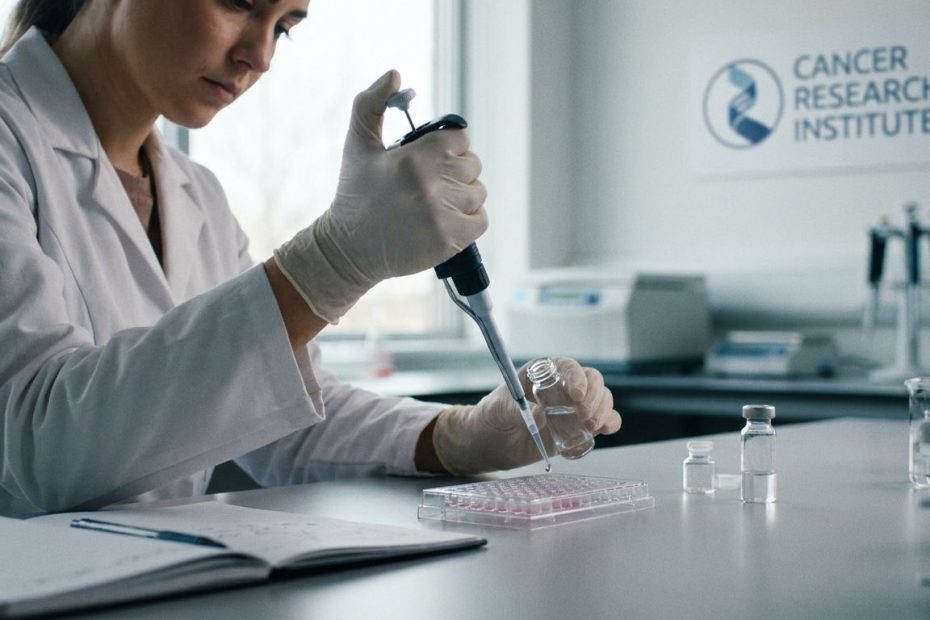
Laboratory skills for cancer research include safe lab practice, accurate pipetting, sterile technique, careful documentation, cell culture, molecular biology assays, biospecimen handling, data analysis, statistics, and responsible research conduct. If you’re aiming for a cancer research lab, your goal isn’t to master every method before applying; it’s to build reliable habits that make your data safe, traceable, and useful.
This guide breaks down the bench, data, and professional skills that help you enter cancer research with confidence. You’ll see which techniques to learn first, which habits protect sample quality, and how modern cancer biology connects wet-lab work with genomics, bioinformatics, imaging, and team science. Use it as a skill roadmap for coursework, internships, research assistant roles, and lab interviews.
Why Laboratory Skills Matter In Cancer Research
Cancer research depends on experiments that other scientists can trust. A result from a cell culture dish, sequencing run, microscope image, flow cytometry panel, or animal model only has value when the sample identity, method, controls, and analysis are sound. That’s why your practical habits matter as much as the name of the technique you learn. A careful beginner often contributes more to a lab than someone who knows technical vocabulary but skips labeling, documentation, or quality control.
The need for trained researchers is real. The American Cancer Society estimates more than two million new cancer cases and more than six hundred thousand cancer deaths in the United States for 2026, which shows why prevention, diagnosis, treatment, survivorship, and cancer biology research remain major public health priorities. At the career level, cancer research connects many roles: medical scientists, biochemists, biophysicists, data scientists, laboratory technologists, clinical research staff, and computational biologists. Your early lab skills can point you toward basic discovery, translational research, clinical research support, population research, or bioinformatics.
Research also moves in stages. Laboratory studies may begin with cells and tissues, expand into animal or computational models, then connect to human biospecimens, biomarkers, diagnostics, or treatment studies. You don’t need to decide your whole career path at the start. You do need to learn how reliable research is built: one controlled experiment, one well-labeled sample, one accurate record, and one honest analysis at a time.
The Foundation: Safety, Accuracy, And Good Lab Habits
Your first skill is working safely. That includes personal protective equipment, chemical hygiene, sharps handling, biological hazard awareness, waste disposal, centrifuge safety, fume hood use, biosafety cabinet use, and decontamination. Safety rules aren’t side tasks that slow research down. They protect you, your labmates, the samples, and the integrity of the project.
Biosafety also requires judgment. The Centers for Disease Control and Prevention explains biosafety levels using factors that include the agent’s infectivity, disease severity, route of exposure, origin, transmissibility, and the work being done. In a cancer lab, you may handle human-derived cells, viral vectors, blood products, tissue, chemicals, or genetically modified material. You should know the local standard operating procedures before you touch anything, and you should ask before improvising.
Accuracy is the second foundation. Pipetting, dilution math, balance use, pH measurement, tube labeling, reagent storage, and sample tracking look basic, but they decide whether an experiment works. A mislabeled tube can erase weeks of work. A poorly mixed dilution can make a drug-response assay meaningless. Treat routine tasks as research skills, not chores.
Core Wet-Lab Skills Every Aspiring Cancer Researcher Should Build
The core wet-lab skill set starts with pipetting and solution preparation. You should learn how to choose the right pipette range, pre-wet tips when needed, avoid bubbles, change tips between samples, and record reagent lots or concentrations. You should also know how to prepare serial dilutions, calculate molarity, label aliquots, and store reagents under the right conditions. These details help your lab compare experiments across days, batches, and researchers.
Aseptic technique comes right after pipetting. Cancer biology labs often work with living cells, so contamination control is a daily habit. You need to understand clean workspace setup, careful tube handling, sterile tips, proper bottle opening, controlled movement inside a biosafety cabinet, and routine surface decontamination. Good aseptic technique prevents bacterial, fungal, and mycoplasma contamination from distorting results.
You should also learn basic assay design. That means using positive controls, negative controls, technical replicates, biological replicates, blanks, untreated controls, and proper sample order. If a treatment appears to reduce cell viability, you need enough control information to know whether the effect came from the treatment, the solvent, plating density, cell health, timing, or assay error. Cancer research rewards patience with controls because controls are what make results interpretable.
Cell Culture Skills For Cancer Biology
Cell culture is one of the most common entry points into cancer biology. You may work with established cancer cell lines, primary cells, immune cells, organoids, or other model systems. Your basic tasks can include thawing cells, feeding cells, splitting cultures, counting cells, plating cells at defined densities, checking morphology, measuring viability, and freezing down stocks. These steps sound simple until you realize that cell health can change the outcome of every downstream assay.
Authentication and contamination testing matter. Misidentified, cross-contaminated, or over-subcultured cell lines can generate false or misleading data, and accepted authentication methods include short tandem repeat profiling for many human cell lines. Mycoplasma testing is also part of responsible culture practice because mycoplasma can alter cell growth, metabolism, gene expression, and drug response without obvious cloudiness in the flask. If you learn cell culture, learn quality control with it.
You should also understand passage number, confluency, doubling time, media components, serum lot differences, freeze-thaw stress, and contamination sources. A cancer cell line is not just a name on a flask. It’s a living research system affected by handling, environment, history, and verification. When you can explain how you maintained cell identity and health, you sound like someone ready for serious bench work.
Molecular Biology Techniques Used In Cancer Research
Molecular biology helps cancer researchers study DNA, ribonucleic acid, proteins, gene expression, mutations, and signaling pathways. Beginner-friendly skills include DNA extraction, ribonucleic acid extraction, polymerase chain reaction, quantitative polymerase chain reaction, gel electrophoresis, restriction enzyme concepts, cloning basics, and sample quality checks. Protein-focused work may include Western blotting, enzyme-linked immunosorbent assay, immunoprecipitation concepts, or protein quantification. You don’t need every technique at once, but you should understand what each method measures.
Cancer genomics adds another layer. The National Cancer Institute describes cancer genome research as the study of DNA, gene expression, proteins, and other molecular features that help identify changes linked to disease. Large cancer projects have mapped genomic changes across many cancer types, and those data now shape how researchers think about drivers, biomarkers, tumor subtypes, resistance, and precision medicine. That means molecular biology skills are stronger when paired with basic genomics literacy.
Functional genomics is worth understanding early, especially Clustered Regularly Interspaced Short Palindromic Repeats, better known as CRISPR. In cancer research, CRISPR methods can alter genes, test gene function, and support screens that evaluate many genes to identify possible drug targets. At the beginner level, focus on the logic: guide design, controls, off-target concerns, readouts, validation, and data interpretation. You may not design a screen in your first role, but knowing how gene perturbation studies work helps you read papers and ask better questions.
Flow Cytometry, Imaging, And Other Specialized Assays
Flow cytometry measures physical and chemical properties of cells using light scattering and fluorescence. In cancer research, it can help analyze immune cell populations, cell cycle, cell death, surface markers, intracellular proteins, cytokines, ploidy, and sorted cell populations. The beginner skill isn’t only pressing buttons on an instrument. You need to understand sample preparation, staining, controls, compensation or spectral unmixing concepts, viability dyes, gating logic, and clean data export.
Microscopy and imaging skills are just as useful. You may examine cell morphology, confluency, tissue structure, fluorescent markers, organoids, stained slides, or treatment effects. Good imaging requires consistent exposure settings, proper controls, scale bars, objective selection, focus discipline, image naming, and honest image handling. A beautiful image is not good evidence unless the acquisition and analysis are consistent.
Core facilities can help you learn these methods without pretending you’re an expert too early. Many research institutions run flow cytometry, microscopy, genomics, proteomics, animal imaging, and sequencing cores that provide training, experimental design help, instrument access, and data analysis guidance. As a student, you should learn how to prepare samples correctly, ask facility staff clear questions, and document settings. Specialized tools are easier to use well when you respect the people who run them every day.
Working With Biospecimens And Cancer Models
Human biospecimens can include tissue, blood, plasma, serum, nucleic acids, and other materials connected to clinical information or study protocols. In cancer research, biospecimen quality affects downstream molecular analysis, so collection, processing, storage, transport, freeze-thaw tracking, chain of custody, and metadata all matter. You may not control how a sample was collected, but you can protect it once it enters your workflow. That means checking labels, logging times, following temperature requirements, and recording deviations.
Biospecimen work also requires respect for protocol limits. Samples may have consent restrictions, data-use rules, de-identification procedures, and storage requirements. You should never treat human-derived material as generic lab stock. Ask what you’re allowed to do, where records are kept, how identifiers are handled, and what documentation the study requires.
Animal models may enter cancer research when a question cannot be answered in cells alone. Animal work requires approved protocols, training, humane endpoints, careful measurement, randomization where appropriate, blinding where feasible, and accurate reporting. The ARRIVE reporting guidelines emphasize design, sample size, bias reduction, outcome measures, statistical methods, animal details, procedures, and results. If your path includes animal research, technical competence and protocol discipline go together.
Data Skills: Bioinformatics, Statistics, And Reproducible Analysis
Modern cancer research produces large and mixed data types: genomics, transcriptomics, proteomics, imaging, metabolomics, flow cytometry files, clinical annotations, and experimental metadata. You don’t have to become a software engineer to work at the bench. You do need enough data literacy to organize files, understand quality checks, read graphs, discuss statistics, and avoid analysis mistakes that make experiments look stronger than they are.
Start with spreadsheet hygiene, file naming, metadata, basic statistics, and clear visualization. Learn what a biological replicate is, what a technical replicate is, why sample size matters, and why a p-value alone does not rescue a weak experiment. Then add practical tools: R programming, Python, version control, command-line basics, and reproducible notebooks when your projects require them. These skills help you communicate with bioinformaticians and check your own work before lab meeting.
Bioinformatics matters because cancer researchers need to store, manage, analyze, share, and interpret large biological datasets. National Cancer Institute resources identify tools and platforms connected to cancer genomics, visualization, imaging, data commons, artificial intelligence, machine learning, and open-source analysis. You can begin with public cancer datasets, genome browsers, mutation viewers, gene expression tools, and basic pathway analysis. Even limited experience can make your bench work sharper because you’ll understand how your samples become data.
Rigor, Reproducibility, And Research Ethics
Responsible research conduct is part of being a scientist, not an administrative box to check. The National Institutes of Health includes data management, rigor and reproducibility, responsible authorship, peer review, conflicts of interest, mentoring, collaborative science, and lab safety among core responsible conduct topics. For you, that means keeping honest records, reporting problems early, labeling data accurately, and avoiding shortcuts that make a result look cleaner than it is. Good science includes the messy details.
Your lab notebook should let another trained person understand what happened. Record dates, goals, sample identifiers, reagent names, lot numbers when relevant, protocol changes, calculations, instrument settings, raw file locations, observations, and unexpected issues. If you repeat an experiment, your notes should help you compare what changed. If a result fails, your notes should help you troubleshoot without guessing.
Reproducibility also depends on design. Use appropriate controls, randomization when relevant, blinding when possible, predefined outcomes, documented exclusion rules, and clear analysis plans. For cell culture, verify identity and contamination status. For biospecimens, document handling. For animal studies, follow reporting and protocol standards. These habits make your work easier to defend, repeat, and build upon.
Soft Skills That Help You Succeed In A Cancer Research Lab
Technical skill gets noticed, but communication keeps projects moving. You should learn how to ask clear questions, summarize what you did, explain what went wrong, and present data without overstating the result. A strong lab meeting update includes the question, method, controls, result, limitation, and next experiment. If your audience can understand your slide without a ten-minute rescue explanation, your communication is improving.
Troubleshooting is another career-making skill. Experiments fail for many ordinary reasons: old reagent, wrong cell density, poor sample quality, contamination, timing error, instrument settings, or analysis choices. A good trainee doesn’t hide failed experiments. A good trainee narrows the possible causes, checks records, talks with the mentor, and runs the right control instead of repeating the same mistake.
Collaboration also matters because cancer research often crosses disciplines. A single project can involve cell biologists, clinicians, pathologists, bioinformaticians, statisticians, animal facility staff, core facility scientists, and patient-facing teams. You build trust by meeting deadlines, documenting decisions, acknowledging help, sharing credit fairly, and learning enough vocabulary to work across specialties. Early-career training groups and professional meetings often stress networking, mentorship, communication, and collaboration because those skills shape real research progress.
How To Build These Skills As A Student
If you’re starting with no experience, begin with coursework and training that build safe habits. General biology, chemistry, biochemistry, molecular biology, statistics, genetics, cell biology, and computer science can all support cancer research. Add lab safety modules, biosafety training, responsible conduct training, and data management training when available. Your first goal is to become teachable, reliable, and safe.
Undergraduate internships and post-baccalaureate programs can help you move from class labs into research settings. The National Cancer Institute describes training opportunities across career stages, including undergraduate and post-baccalaureate research experiences. The American Cancer Society also describes an undergraduate cancer research internship involving hands-on research, mentoring, and career-development activities at research institutions. These programs are designed to build skills, so don’t count yourself out because you haven’t mastered advanced methods yet.
You can also learn through campus labs, paid research assistant roles, volunteer research roles where allowed, summer programs, core facility workshops, journal clubs, protocol reading, and online training from trusted institutions. When you contact a lab, focus on fit and preparation. Read one or two recent papers from the group, identify the techniques they use, and explain what you’re ready to learn. A short, specific email beats a long message that says you’re interested in “anything.”
What To Put On A Cancer Research Lab Resume
Your resume should be honest about exposure, training, and independent ability. Don’t list a technique as if you can run it alone when you only watched it once. Use wording that reflects your level: “trained in,” “assisted with,” “performed under supervision,” “independently performed,” or “analyzed data from.” This helps mentors place you safely into the right tasks and shows professional maturity.
Group skills into categories so a busy principal investigator or lab manager can scan quickly. Useful categories include laboratory safety, cell culture, molecular biology, microscopy, flow cytometry, animal model exposure, biospecimen handling, data analysis, statistics, programming, documentation, and scientific communication. Include instruments, software, and model systems only when you can discuss them. If you worked with a biosafety cabinet, quantitative polymerase chain reaction instrument, fluorescence microscope, R programming, Python, or a cancer cell line, be ready to explain what you did.
Your resume should also show habits. Mention lab notebook documentation, standard operating procedures, sample labeling, quality control, sterile technique, data visualization, poster presentation, literature review, or teamwork when true. Cancer research labs train students in techniques, but they look for signs that you’ll handle samples carefully and communicate problems early. Reliability is a skill, and it belongs on your application when you can support it.
What Skills Do Cancer Researchers Need?
Safety, pipetting, sterile technique, cell culture, molecular assays, biospecimen handling, data analysis, statistics, documentation, research ethics, communication, and teamwork.
Build The Skill Set That Makes Your Research Trustworthy
Essential laboratory skills for aspiring cancer researchers are practical, teachable, and connected. Start with safety, accuracy, labeling, documentation, and contamination control, then add cell culture, molecular biology, imaging, flow cytometry, biospecimen handling, and data analysis as your projects require them. Don’t treat computational skills or communication as extras; they help you interpret results, work with collaborators, and explain why your experiment matters. The strongest early-career researchers are not the ones who claim to know every technique. They’re the ones who protect sample quality, ask good questions, document carefully, and build skills in a way that other scientists can trust.
References
- American Cancer Society — Internship For College Undergraduates Frequently Asked Questions
- Canadian Cancer Society — Laboratory Research
- National Institutes Of Health Office Of Intramural Research — Responsible Conduct Of Research Training
- American Cancer Society — Cancer Statistics Center
- National Cancer Institute — Center For Cancer Training
- National Cancer Institute — Cancer Training At National Cancer Institute
- Occupational Safety And Health Administration — Laboratories Overview
- Centers For Disease Control And Prevention — Biosafety In Microbiological And Biomedical Laboratories
- Centers For Disease Control And Prevention — Recognizing The Biosafety Levels
- National Center For Biotechnology Information — Authenticated Cell Lines
- International Cell Line Authentication Committee
- American Type Culture Collection — Cell Line Authentication Test Recommendations
- American Type Culture Collection — Animal Cell Culture Guide
- National Cancer Institute — Biospecimen Technical And Operational Best Practices
- National Cancer Institute — Cancer Genome Research And Precision Medicine
- National Cancer Institute — Bioinformatics, Big Data, And Cancer
- National Cancer Institute — How CRISPR Is Changing Cancer Research And Treatment
- National Heart, Lung, And Blood Institute — Flow Cytometry Core
- ARRIVE Guidelines 2.0 — Updated Guidelines For Reporting Animal Research
- United States Bureau Of Labor Statistics — Medical Scientists
- United States Bureau Of Labor Statistics — Biochemists And Biophysicists
- United States Bureau Of Labor Statistics — Data Scientists
- American Association For Cancer Research — Early-Career Researcher Professional Development

Maurizio Chiriva Internati (DBSc, PhDs) is a cancer immunologist and biotech entrepreneur with 20+ years in immuno-oncology. Co-founder and former CEO of Kiromic BioPharma (NASDAQ: KRBP), he has led AI-driven target discovery and translational programs, and has served on faculty at MD Anderson and Texas Tech.